
How to Remove Hard Water Spots and Mineral Buildup in Greater Phoenix Homes
Phoenix tap water ranks among the hardest in the country, leaving white mineral deposits on shower glass, faucets, and tile grout. Here is exactly how to fight back, room by room.
Why Greater Phoenix Has Such a Hard Water Problem
If you have lived in Chandler, Gilbert, Scottsdale, or any corner of the Valley for more than a few months, you already know the telltale signs: a white, chalky film on your shower door, crusty buildup around faucet bases, and tile grout that looks dingy no matter how often you scrub. That film is not soap scum. It is calcium carbonate and magnesium, minerals that occur naturally in the Colorado River and Salt River water that supplies most of Greater Phoenix.
According to the City of Phoenix Water Services Department, local tap water measures between 200 and 300 parts per million of dissolved minerals. Water above 180 parts per million is classified as very hard. For comparison, water in the Pacific Northwest or Southeast often measures under 60 parts per million. Living here essentially means your plumbing, fixtures, and glass surfaces are in a constant battle with mineral-rich water, and mineral deposits always win if you ignore them long enough.
The desert climate makes it worse. When Phoenix summer temperatures push past 110 degrees, water evaporates from surfaces almost instantly, leaving 100 percent of its mineral load behind as a deposit. A quick splash around your kitchen sink in July dries in seconds and leaves a white ring that, left untreated, hardens into a near-permanent crust.
Understanding What You Are Actually Dealing With
Hard water deposits fall into a few categories, and knowing which one you are looking at helps you choose the right cleaning approach.
- Calcium carbonate scale: The most common culprit in Phoenix. White or off-white, powdery when fresh, rock-hard when it has built up over months. Shows up on shower glass, tile, and around sink drains.
- Limescale: A denser form of calcium buildup that forms in areas with repeated heat and water contact, like around a faucet base or inside a kettle. It bonds chemically to surfaces and resists plain scrubbing.
- Silica scale: Less common but more stubborn. A glassy, almost clear film that forms when water with high silica content dries on glass or chrome. Once it etches into the surface, it requires a mild abrasive to remove.
- Iron staining: Reddish-brown streaks, more common in homes with older well water or older galvanized pipes. Requires a different treatment than calcium-based deposits.
The One Rule That Makes Everything Easier
Acid dissolves calcium and magnesium deposits. That is the chemistry behind every effective hard water treatment. Alkaline cleaners like standard all-purpose sprays do almost nothing to mineral scale. You need something acidic, and the good news is that the most effective options are inexpensive and already in most Phoenix kitchens.
Room-by-Room Guide to Removing Hard Water Deposits
Shower Glass and Enclosures
Shower glass in Phoenix homes, especially in newer builds in Queen Creek, Peoria, and Surprise where construction boomed during the mid-2000s, tends to be frameless or semi-frameless, which looks beautiful when clean and absolutely terrible when mineral buildup has gone unchecked for a season.
For fresh or moderate buildup, white distilled vinegar is your best starting point. Fill a spray bottle with undiluted white vinegar and spray the entire glass surface. Let it sit for 10 to 15 minutes. The acetic acid in the vinegar reacts with the calcium carbonate and loosens the bond to the glass. Wipe with a non-scratch scrubbing pad in circular motions, then rinse thoroughly.
For heavy buildup that vinegar alone cannot shift, step up to a paste made from equal parts Bar Keepers Friend powder and water. Apply it with a damp sponge, let it sit for five minutes, scrub gently, and rinse well. Bar Keepers Friend contains oxalic acid, which is stronger than acetic acid and effective against the silica-based scale that forms on older glass.
After cleaning, dry the glass immediately with a squeegee. In Phoenix's climate, a squeegee after every shower is genuinely the single most effective preventive measure you can take. It takes 20 seconds and eliminates almost all future buildup.
Chrome and Brushed Nickel Faucets and Fixtures
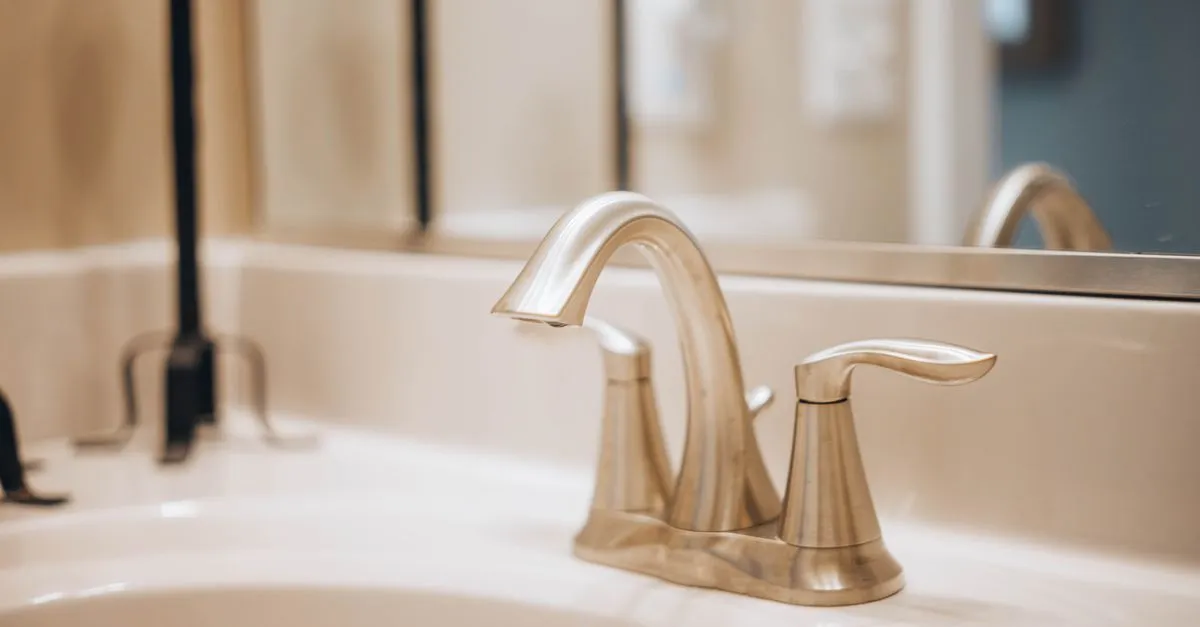
The base of a bathroom or kitchen faucet is a mineral deposit magnet. Water constantly splashes there, evaporates, and leaves its calcium behind. Over time the buildup can look like a tiny volcano ring around the fixture base.
Soak a few paper towels in white vinegar and wrap them tightly around the affected area. Leave them in place for 30 minutes to an hour. The vinegar softens the scale without scratching the finish. Remove the paper towels and use an old toothbrush to work into tight seams. Rinse and dry completely.
For brushed nickel finishes, which are common in updated Arcadia and Paradise Valley homes, avoid anything abrasive. Stick with the vinegar soak method only. Abrasive scrubbers will scratch and permanently dull the finish.
Tile and Grout
Tile in Phoenix bathrooms, particularly the large-format porcelain tiles popular in Tempe and Ahwatukee remodels, holds up well to acidic cleaners. Ceramic and porcelain tile can handle a diluted vinegar solution or a commercial acid-based tile cleaner. Apply it to the tile surface, let it dwell for a few minutes, scrub with a stiff-bristle brush, and rinse.
Grout is more complicated. Standard cement grout is slightly porous and can be damaged by repeated exposure to strong acids. Use vinegar solutions on grout sparingly. For regular mineral buildup on grout, a baking soda paste applied with a toothbrush, followed by a light rinse with diluted vinegar, creates a fizzing reaction that lifts deposits without prolonged acid exposure.
If your grout has turned dark or the surface looks eroded, it may need to be sealed or replaced. A sealer applied after cleaning creates a barrier that slows future mineral penetration considerably.
Kitchen Sinks and Around Drains
Stainless steel kitchen sinks in Phoenix homes develop mineral deposits quickly because of how often they are used and how fast water evaporates in the dry air. A simple vinegar rinse at the end of dishwashing, left to sit for two or three minutes before rinsing, keeps most deposits from forming in the first place.
For existing buildup around the drain or in the basin, sprinkle Bar Keepers Friend directly onto a damp sink surface, add a bit of water to form a paste, and work it in with a soft cloth. Rinse completely. Never let any powdered cleaner dry on stainless steel; it can cause surface damage.
Toilets
The ring inside a toilet bowl in a Phoenix home is a mix of mineral deposits and organic buildup. Standard toilet bowl cleaners are often acidic enough to handle light rings. For stubborn mineral rings, pour one to two cups of white vinegar directly into the bowl, let it sit for 30 to 60 minutes, then scrub with a toilet brush. For very heavy scale, a pumice stone designed for toilet bowls can be used carefully on porcelain without scratching.
Products That Actually Work in the Phoenix Market
Not every product on a big-box store shelf is worth your money. Here are the ones that consistently perform against the mineral content in Valley tap water.
- White distilled vinegar: Inexpensive, effective for fresh and moderate buildup, safe on most surfaces. Buy it by the gallon at any Fry's or Walmart.
- Bar Keepers Friend (powder or liquid): The workhorse for glass, stainless steel, and porcelain. Widely available and genuinely effective.
- CLR (Calcium, Lime, Rust): Stronger than vinegar and effective on very heavy scale. Follow directions carefully and rinse thoroughly. Not safe for all surfaces, so read labels.
- Lime-A-Way: Similar chemistry to CLR. Works well on toilet bowls and fixture bases.
- Squeegee: Not a chemical, but arguably the most important tool for Phoenix homeowners. Use it on every glass surface after every use.
When DIY Is Not Enough: Getting a Professional Deep Clean
If mineral buildup in your home has been ignored for a season or more, especially in a house that sat vacant during a summer in Mesa or Glendale, the scale can be thick enough that a single DIY session will not fully resolve it. Surfaces need time and repeated acid exposure to release heavy buildup, and some areas like behind faucet handles or along grout lines in large tiled showers are genuinely difficult to reach without professional tools and technique.
A professional deep cleaning from Neat N Tidy addresses the hard water buildup that has accumulated over time throughout your bathrooms and kitchen, using the right products on the right surfaces without damaging finishes. It is especially useful as a reset when you move into a previously occupied home or after an extended period when regular cleaning fell behind.
Keeping It Under Control Long-Term
The real solution to hard water in Phoenix is consistency. Mineral deposits that are addressed weekly never become the hours-long projects that heavy, neglected scale requires. A few habits make a significant difference.
- Squeegee shower glass after every use.
- Wipe faucet bases dry after using the sink.
- Do a light vinegar spray on tile weekly rather than a heavy scrub monthly.
- Apply a water-repellent product like Rain-X to clean shower glass two to three times a year. It causes water to bead and run off rather than sit and evaporate.
- Consider a whole-house water softener if your home does not already have one. They are common in newer developments in Maricopa and Buckeye but less so in older Tempe or central Phoenix stock.
Homeowners who invest in recurring professional cleaning find that regular maintenance visits keep hard water buildup from ever reaching the heavy-scale stage. Recurring clients also benefit from significant savings compared to one-time pricing, 30 to 50 percent depending on frequency, which makes it a practical long-term choice for most Valley households.
A Note on Protecting Different Finish Types
Greater Phoenix has a wide range of housing stock, from 1960s block-construction homes in central Scottsdale with original chrome fixtures to brand-new builds in Eastmark with matte black finishes and unlacquered brass hardware. The wrong cleaner on the wrong finish can cause permanent damage.
- Chrome: Handles vinegar and Bar Keepers Friend well. Avoid abrasives.
- Brushed nickel: Use vinegar soaks only. No abrasive pads or powders.
- Matte black: Very sensitive to acids. Use only manufacturer-recommended cleaners or plain water with a soft cloth.
- Unlacquered brass: Develops a patina naturally. Mild dish soap and water only. Acids will strip the finish.
- Oil-rubbed bronze: Similar to matte black. Avoid acids entirely.
When in doubt about a finish, test any cleaner on an inconspicuous spot and wait five minutes before proceeding.
The Bottom Line for Phoenix Homeowners
Hard water is simply a fact of life in Greater Phoenix. The Colorado River is not going to become soft water anytime soon, and the desert heat is not going to slow evaporation. But with the right products, a consistent routine, and an understanding of how mineral deposits actually work, you can keep your glass, fixtures, and tile looking genuinely clean rather than perpetually cloudy. Start with vinegar and a squeegee, step up to Bar Keepers Friend or CLR for heavy buildup, and build the prevention habits that keep things manageable week to week.
Frequently Asked Questions
Ready for a Cleaner Home in Phoenix?
Tell us about your home and we'll recommend the right service. Free quote in 60 seconds.
You're All Set!
We'll call you within 5 minutes.